
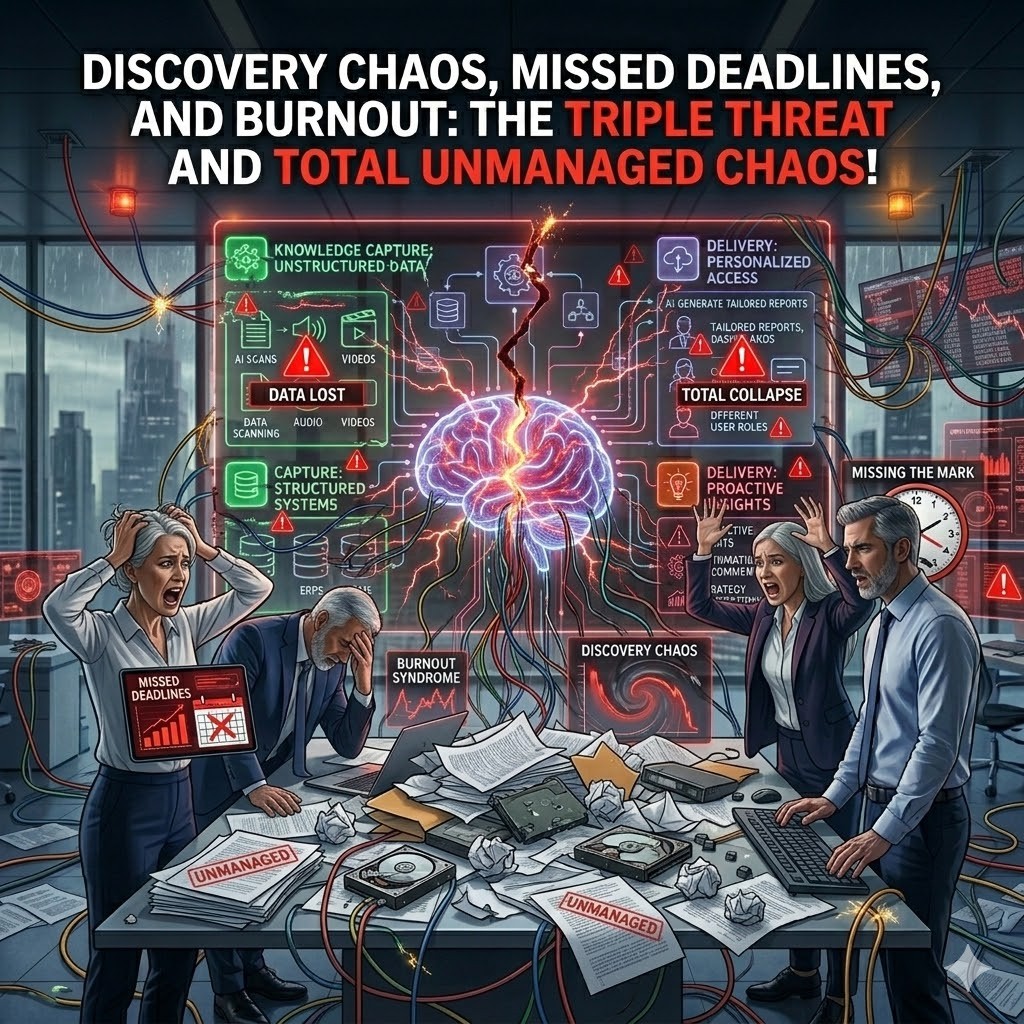
In Salesforce projects, failure rarely starts at go-live, it begins long before that. The build phase often gets the blame for project overruns, but in truth, the seeds of trouble are sown during discovery. When requirements are unclear, incomplete, or poorly managed, teams inherit chaos that spreads through every sprint and stakeholder meeting.
The Discovery Chaos Problem
Modern Salesforce projects generate mountains of input before development even begins: Zoom call transcripts, Slack threads, emails, product notes, and screenshots. Without a structured intake or documentation process, these fragments quickly spiral into what can only be called discovery chaos.
This chaos translates into lost clarity and increased technical debt:
Unstructured inputs: Requirements exist in multiple formats across tools, with no consistent naming or linking to business outcomes.
Ambiguous language: Requirements are often wrapped in subjective phrases like “optimize the flow” or “make it seamless.”
Missing ownership: When responsibilities aren’t documented, decisions float between teams.
Recent studies show the magnitude of this issue. According to the Wellingtone State of Project Management Report, 41% of project managers admit they don’t use any formal methodology. That lack of structure leads directly to confusion in documentation and coordination. More alarmingly, only 35% of projects are completed successfully and just 34% finish on time or within budget. The rest falter often because discovery wasn’t managed with discipline.
Missed Deadlines: The Ripple Effect of Bad Discovery
Once data chaos sets in, deadlines don’t just slip—they collapse. Poorly defined requirements trigger a ripple effect across design, build, testing, and even user adoption.
Rework spirals out of control: Most of software work is rework, redoing features due to unclear or changing requirements. Even it comes more expensive than getting it right the first time.
Dependencies get missed: Teams uncover unexpected processes or integration overlaps only after work begins.
Stakeholder drift grows: Each department defines “success” differently, leading to multiple rounds of revisions, frustration, and finger-pointing.
PMI’s 2025 survey underscores this pattern, revealing that $1 million is wasted every 20 seconds globally due to poor project management, a staggering $2 trillion per year. In Salesforce implementations, these inefficiencies manifest as postponed rollouts, budget overruns, and frustrated teams.
IBM’s classic research still holds: fixing a defect discovered during design is 100x cheaper than fixing one found in production. Yet many teams persistently underinvest in catching requirement errors early, preferring to “work it out later”, until “later” costs a sprint or a release.
Burnout: The Hidden Side Effect
The human cost of broken discovery is harder to quantify, but no less critical. Across IT and software teams, over 67% report moderate to severe burnout symptoms in the past year. Constant firefighting, context switching, and unclear deliverables create an environment where people feel perpetually behind.
Context overload: Salesforce admins and architects must navigate messy notes and conflicting requirements, juggling technical design with business pressure.
Emotional fatigue: Teams build and rebuild the same features due to miscommunications.
Ownership erosion: When requirements shift weekly, accountability vanishes and burnout accelerates.
The link between bad discovery and burnout is direct, teams never feel “done.” Each project’s moving target becomes a psychological stressor, sapping motivation and creativity.
Breaking the Cycle: Intelligent, AI-Driven Discovery
The good news is, GenAI is finally stepping in where human bandwidth hits its limit. The Stanford 2025 AI Index Report shows that adoption of GenAI tools for project documentation and analysis has grown 15% as compared to the previous year. These tools are transforming the discovery stage from chaos to clarity.
Here’s how intelligent discovery works:
AI transcription + summarization: Project calls can be instantly converted into structured user stories.
Context extraction: Large language models trained on CRM data flag ambiguities like “auto-notify the right people” and request clarification before development begins.
Dependency mapping: Tools analyze Salesforce metadata to predict ripple effects e.g., whether a field update in Sales Cloud might affect Service Cloud automations.
Early alignment: AI-generated storyboards and org diagrams give stakeholders a clear blueprint to approve, cutting alignment cycles by half.
Industry pilots show measurable results. Teams using AI-driven requirement extraction tools report reduction in time-to-first-build and less rework during UAT. In other words, AI transforms discovery from a bottleneck into an accelerator.
Building Resilience with Smarter Discovery Practices
Even as AI evolves, human alignment and discipline matter. Teams can reinforce their discovery processes through these best practices:
Standardize requirement formats: Enforce templates with acceptance criteria, dependencies, and measurable outcomes.
Centralize project context: Keep recordings, notes, and stories in a unified repository with version control.
Adopt a “validate early” habit: Review AI-generated or human-written requirements in real time with business users.
Measure rework: Track causes of redesigns or delays whether from ambiguity, late feedback, or scope creep and address root causes.
Prioritize mental load: Schedule discovery retrospectives to identify where cognitive overload can be reduced for the team.
The Takeaway: Fix the Start, and the Finish Fixes Itself
Discovery isn’t a prelude; it’s the foundation. When Salesforce teams begin with structured, data-rich, AI-assisted discovery, the result isn’t just faster delivery, it’s sustainable delivery.
By taming discovery chaos, eliminating rework, and protecting teams from burnout, organizations move from firefighting to foresight. The next evolution in project success isn’t in how we build. It’s in how we begin.