
Team Cloobot
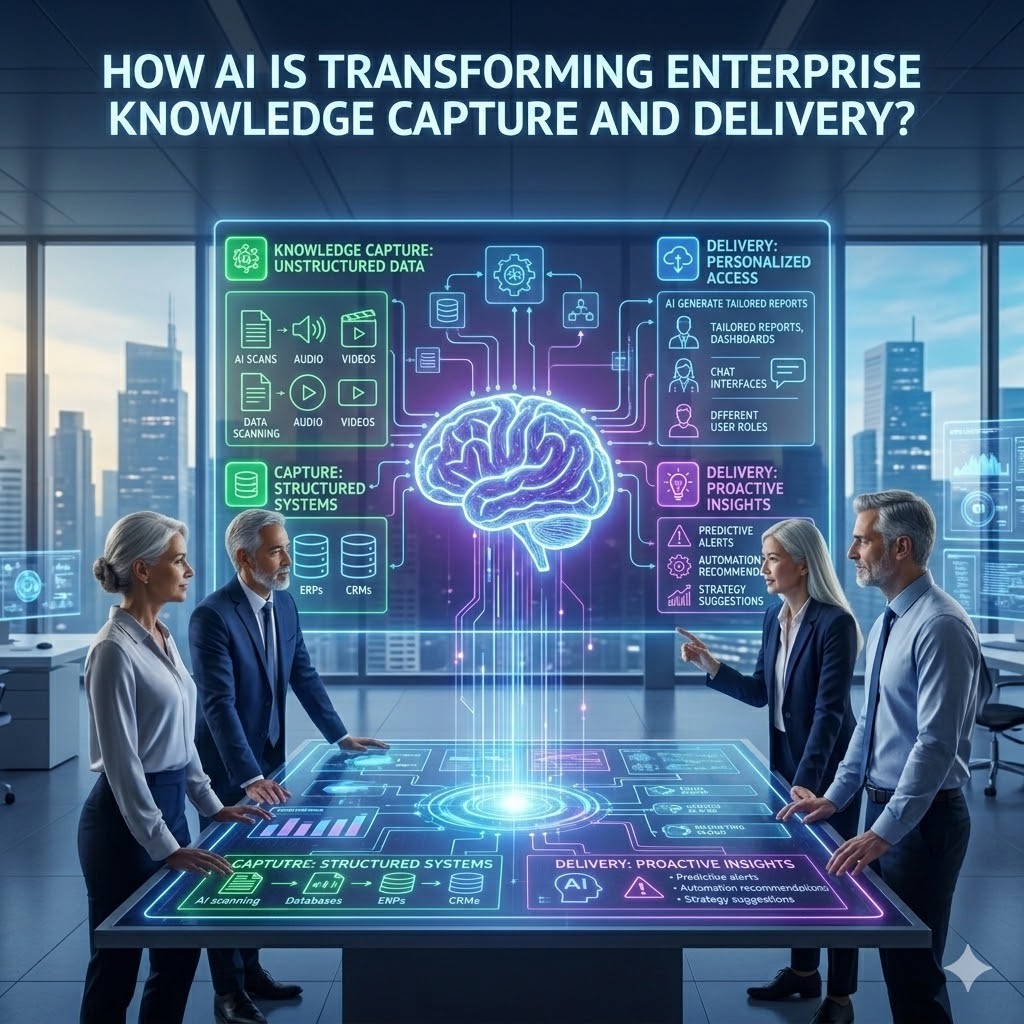
Every organization is a collector of calls, chats, documents, and databases, which pile up daily. And yet, most teams find themselves searching for answers hidden in plain sight. In 2025, making sense of all this knowledge is no longer about volume; it’s about turning noise into signals. Imagine a support manager who spends half her week chasing insights through fragmented screens now, AI is flipping that equation, changing not only how knowledge is found, but how it’s delivered where it’s needed most.
The Cost of Fragmentation
Still, the cost of “knowledge chaos” is measurable. A McKinsey Global Institute report shows companies lose up to 35% in employee time simply hunting for information, and productivity can jump by 20–25% with smart knowledge systems in place. Yet, KMWorld finds 36% of enterprises use three or more platforms for managing information, 31% don’t even know how many tools are in play, leading to duplication, inconsistency, and wasted effort.
The AI Revolution: Moving From Search to Insight
In 2025, AI doesn’t just retrieve—it understands.
38% of knowledge management teams use AI for content recommendations or asset delivery.
31% lean on generative AI to create and summarize new artifacts.
28% leverage intelligent or AI-powered search.
These technologies do more than speed up finding things—they reveal context, flag gaps, and proactively curate answers before users ask for them.
Intelligent Delivery: Personalization, Speed, and Scale
AI-driven systems personalize knowledge delivery based on roles, skillsets, and real-time demand. Gartner predicts AI-powered KM will slash average resolution times by 30% by 2026, with enterprises gaining not just speed but smarter workflows and less duplication. Companies deploying chatbots and virtual assistants report faster onboarding—sometimes 80% quicker knowledge creation, with 100% agent participation.
Filling the Blanks: Connecting Islands of Expertise
Modern knowledge platforms map connections between people, teams, and tools—flagging silent experts, gap areas, and unspoken assumptions. AI-powered knowledge graphs link content so missing processes and “unknown unknowns” surface naturally. Nearly 86% of firms experience measurable improvements using hyper-personalization—resulting in better decision-making and quicker execution.
The Human Factor: Partnering With AI for Continuous Learning
While machines capture, surface, and organize, people curate the meaning. Over 41% of KM leaders in a recent APQC study chose “incorporating AI and smart technology” as their biggest priority—for continuous improvement and organizational memory. When entire teams evolve or rotate, AI preserves context, bridging learning gaps and keeping organizational wisdom intact.
Future-Proofing Enterprise Knowledge
The global KM market is projected to reach $2.1 trillion by 2030, with cloud and AI adoption steadily rising. By the end of 2025, analysts expect half of all enterprise data to be stored in the cloud, up from 25% a decade ago. Organizations using AI for knowledge management report greater agility, lower operational risk, and smarter investments—shifting from tool counts to unified, strategic platforms.
Final words
AI is quickly becoming the “connective tissue” for enterprise knowledge, allowing leaders and teams to find, share, and apply the right insight on demand. The competitive edge isn’t just having more data; it’s turning learning and context into real business outcomes. With CloobotX’s platform, organizations build resilience and clarity—turning knowledge capture from a back-office slog into a strategic advantage.